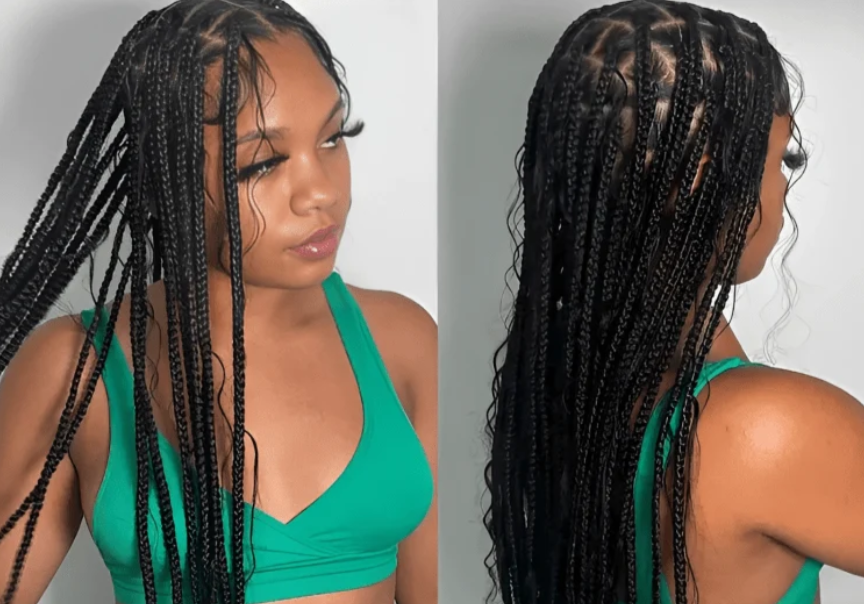

What Are French Curl Braids?
French curl braids combine braided sections with long, loose curls that create a flowing finish. The style is known for its contrast between neat braids and soft, dramatic curls.
Human hair can be considered for the loose sections because it offers natural movement and a realistic appearance. The exact result depends on the curl pattern, length, installation technique, and quality of the extensions.
Whether you are planning the style for an everyday look or a special occasion, preparation is important. Choosing suitable hair and planning the braid pattern before installation can make the process more organized.
For people comparing different hair options, the Ywigs human hair collection offers a starting point for exploring textures and extension formats.
What You Need Before Starting
Before beginning the installation, prepare the necessary materials.
- Suitable human braiding hair.
- Human hair with an appropriate curl pattern for the loose sections.
- A rat-tail comb for sectioning.
- Hair clips.
- Suitable hair ties or accessories.
- A brush or detangling tool.
- Products recommended for preparing natural hair.
- A mirror and a comfortable styling area.
The exact materials depend on the technique and the stylist’s preferences. Choose extensions that are suitable for the intended braid style.
Step 1: Choose the Right Human Hair
The extensions determine much of the final appearance.
For the braided sections, choose hair that can be incorporated into the desired braid pattern. For the loose French curls, select a texture and length that create the movement you want.
Consider these factors:
Texture: Choose a curl pattern that creates the desired finish.
Length: Longer curls create a dramatic look, while shorter lengths can be easier to manage.
Color: Match the extensions to your natural hair or select a contrasting shade intentionally.
Quantity: The amount depends on braid size, number of braids, and how much hair will remain loose.
Explore human hair braiding extensions to compare suitable options and product details.
Step 2: Prepare Your Natural Hair
Start with clean, detangled natural hair. Follow your stylist’s recommended preparation routine and make sure the hair is ready for sectioning.
Avoid applying excessive products that may make the hair difficult to handle during installation.
If your natural hair is fragile or prone to breakage, discuss the installation method with a qualified stylist. The goal is to create a comfortable style without unnecessary tension.
Step 3: Create Your Sections
Use a rat-tail comb to divide the hair into the desired sections.
The size and arrangement of the sections influence the final look. Smaller braids can create a more detailed appearance, while larger sections may produce a bolder style.
Keep the sections neat and consistent. If you want a middle or side part, plan it before beginning the braiding process.
Step 4: Begin Braiding
Start with one section and use the selected braiding technique to incorporate the extension hair.
The stylist should maintain consistent tension without pulling excessively at the roots. The braid should be secure but comfortable.
Repeat the process according to the planned pattern, checking the overall balance as you progress.
If you are new to braiding, practicing the technique on a small section or working with an experienced stylist can help you avoid uneven sections and unnecessary tension.
Step 5: Add the Loose French Curl Sections
The loose curls create the signature appearance of French curl braids.
Depending on the chosen technique, the curly hair may be incorporated or arranged so that the loose sections remain visible alongside the braids.
The amount of loose hair should be balanced. Too much can make the style difficult to maintain, while too little may produce a less dramatic finish.
Make sure the curl sections are distributed consistently so that the overall hairstyle looks intentional.
Step 6: Finish and Check the Style
Once the braids are complete, check the overall shape and placement.
Look for uneven sections, excessive tension, and areas where the curls may be tangled. Make any necessary adjustments gently.
The finished hairstyle should feel comfortable. Persistent pulling, pain, or scalp discomfort should not be ignored.
How to Maintain French Curl Braids
French curl braids combine braided sections with loose curls, so maintenance should address both parts of the style.
Protect the Curls at Night
Use a satin or silk bonnet to reduce friction while sleeping. Arrange longer curls carefully before covering them.
Detangle Gently
Work through the loose curls from the ends upward. Avoid aggressive brushing or pulling.
Keep Products Lightweight
Use suitable products in moderation. Heavy buildup can make the loose hair difficult to manage.
Look After Your Scalp
Maintain a suitable scalp-care routine and avoid excessive product accumulation around the roots.
Follow Washing Instructions
The appropriate washing method depends on the hair material and installation. Follow the supplier’s recommendations.
Common French Curl Braid Mistakes
Choosing the wrong curl texture: The curl pattern should complement the desired hairstyle.
Uneven sectioning: Inconsistent sections can affect the overall appearance.
Using excessive tension: Tight braids can cause discomfort and place unnecessary stress on natural hair.
Ignoring loose curl maintenance: The curls need gentle detangling and nighttime protection.
Buying insufficient hair: Plan the quantity based on the number of braids and the amount of loose hair required.
See also: Signs You May Need a Labour Lawyer in Toronto
Conclusion
French curl braids with human hair combine structured braids with flowing curls to create a distinctive hairstyle. Choosing suitable extensions, preparing the natural hair, sectioning carefully, and maintaining comfortable installation tension are all important. With gentle care and proper nighttime protection, the style can remain organized and attractive throughout its intended wear period.
Frequently Asked Questions
1. What are French curl braids?
They are a braided hairstyle featuring long, loose curls that create a flowing finish.
2. Can human hair be used for French curl braids?
Human hair can be considered for the braided or loose sections when the product is suitable for the intended technique.
3. What curl texture should I choose?
Choose a texture that matches the look you want and is compatible with the selected braid style.
4. How long does installation take?
Installation time depends on braid size, number of sections, length, and stylist experience.
5. How do I maintain the loose curls?
Detangle gently, protect them at night, and use suitable products in moderation.
6. Can I wash French curl braids?
Washing depends on the hair material and installation. Follow the product’s care instructions.
7. How do I prevent the braids from feeling too tight?
The stylist should use comfortable tension. Persistent pain or pulling should be addressed immediately.
8. How much hair do I need?
The quantity depends on braid size, length, and how much hair will remain loose.