
Rugs collect dust, dirt, pet hair, spills and other everyday debris that regular vacuuming cannot always remove. Over time, these particles settle deep within the fibres, affecting the rug’s appearance, texture and freshness. Professional rug cleaning services help remove embedded dirt, address stubborn stains and maintain the condition of different rug materials. Understanding the cleaning methods, treatment requirements and maintenance practices can help homeowners make better decisions about caring for their rugs.
Why Rugs Need More Than Regular Vacuuming
Vacuuming is an essential part of routine rug maintenance, but it mainly removes loose dirt from the surface. Fine dust, oily residues and small particles can settle between the fibres and accumulate near the backing. Foot traffic pushes this debris further into the material.
This build-up can cause several problems:
- Faded appearance: Dirt and grit can make rug colours look dull over time.
- Fibre damage: Abrasive particles may gradually wear down delicate fibres.
- Lingering odours: Food spills, pet accidents and moisture can leave unpleasant smells.
- Allergen accumulation: Dust, pollen and pet dander can collect within the pile.
- Stubborn stains: Spills become harder to treat when they remain untreated for extended periods.
A suitable deep-cleaning process removes much of this accumulated material while helping preserve the rug’s original appearance.
Different Rugs Require Different Cleaning Methods
Not every rug can withstand the same cleaning process. Fibre composition, construction, dye stability and backing materials determine which treatment is appropriate.
Wool rugs: Wool is naturally resilient but can shrink or become damaged if exposed to excessive heat, harsh chemicals or incorrect drying conditions. Gentle cleaning products and controlled moisture are generally preferable.
Synthetic rugs: Nylon, polyester and polypropylene rugs are commonly found in busy households. Many can tolerate stronger cleaning methods than delicate natural fibres, although the manufacturer’s care instructions should still guide treatment.
Silk rugs: Silk requires particularly careful handling because its fibres can lose their texture and lustre through aggressive washing. Specialist cleaning is advisable.
Cotton rugs: Cotton can absorb considerable moisture and may be vulnerable to colour bleeding or shrinkage. Proper washing and drying techniques help maintain its shape.
Handwoven and antique rugs: Older rugs may have weakened fibres, unstable dyes or fragile edges. Their condition should be assessed before any cleaning treatment begins.
Identifying the rug material before selecting a cleaning method reduces the risk of unnecessary damage.
How Professional Cleaning Removes Deep-Set Dirt
Professional cleaning involves several stages, with each stage addressing a different type of contamination. The exact process depends on the rug’s construction and condition.
Initial Inspection
The cleaner examines the rug to identify its fibre type, backing, stains, colour stability and areas of wear. This assessment helps determine whether the rug can be washed or requires a specialised treatment.
Dust and Debris Removal
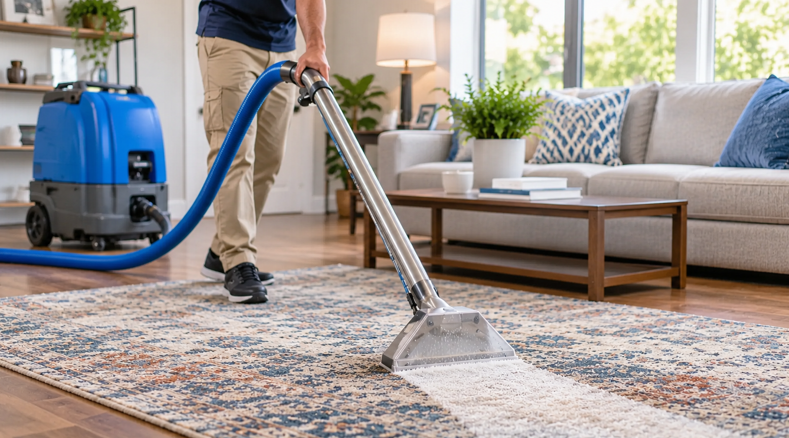
Dry soil removal is an important preparation step. Professional equipment can extract loose particles trapped deep within the pile. Removing this material before washing prevents dirt from turning into muddy residue during the cleaning process.
Stain Treatment
Different stains require different treatments. Coffee, wine, grease, ink and pet accidents do not respond equally to the same cleaning products. Applying an unsuitable chemical may spread the stain or affect the dye.
A professional cleaner selects a treatment based on the stain type and fibre compatibility.
Washing and Rinsing
Depending on the rug, cleaning may involve controlled washing, low-moisture treatment or specialised extraction. Proper rinsing removes loosened dirt and detergent residue that could otherwise attract more dust.
Drying and Final Inspection
Thorough drying helps prevent musty odours, mildew and backing deterioration. Once dry, the rug is inspected for remaining stains, residue and areas requiring additional attention.
Choosing a Suitable Rug Cleaning Provider
Finding a reliable cleaning provider involves more than comparing prices. The quality of the equipment, experience with different materials and treatment procedures can affect the final result.
A dependable rug cleaning company should be able to explain its cleaning process and identify any risks associated with your particular rug.
Consider these points before making a booking:
- Experience with rug materials: Ask whether the team regularly handles wool, silk, cotton, synthetic and antique rugs.
- Cleaning techniques: Find out whether they offer washing, steam extraction, dry cleaning or low-moisture treatments.
- Stain removal procedures: Check how they approach difficult stains and whether they test cleaning products before application.
- Collection and delivery: Large or delicate rugs may benefit from off-site cleaning facilities.
- Insurance and handling: Confirm that the provider has suitable procedures for protecting valuable rugs.
- Customer feedback: Read reviews that mention cleaning quality, communication, punctuality and the condition of returned rugs.
A clear explanation of the process is often a better sign of professional service than an unusually low quotation.
When Should You Arrange a Deep Clean?
Cleaning frequency depends on how often a rug is used, where it is placed and what type of household environment it experiences.
The following situations may indicate that professional attention is needed:
Visible dirt remains after vacuuming: Persistent dullness or embedded debris can indicate that surface cleaning is no longer sufficient.
Unpleasant smells develop: Odours caused by spills, moisture or pets may remain even after the visible mess has been removed.
The rug feels rough or sticky: Accumulated soil and detergent residue can change the feel of the fibres.
Pets frequently use the area: Pet hair, dander and accidental stains can require more frequent treatment.
The rug is positioned near an entrance: Entryway rugs collect outdoor dirt, mud and moisture at a faster rate than rugs in less-used rooms.
Homes with children, pets or heavy foot traffic may need more frequent cleaning than households where rugs receive limited use.
Finding Reliable Cleaning Help in Your Area
Searching online for area rug cleaning services near me can produce several local providers, but the nearest option may not always offer the right expertise. Compare their experience, available treatments and ability to handle your rug’s specific material.
Look for detailed service descriptions rather than relying solely on advertising claims. A provider should be willing to discuss the cleaning method, estimated completion time and any limitations before accepting the rug.
When comparing rug cleaning services near me, check whether the quotation includes inspection, stain treatment, washing, drying and delivery. Some providers charge separately for specialised treatments, so understanding the full cost beforehand helps avoid unexpected expenses.
Local recommendations can also be useful. Ask neighbours, friends or property managers about their experiences with cleaning companies. Reviews that include details about particular rug types can provide more useful information than general star ratings.
Simple Habits That Keep Rugs Cleaner Between Appointments
Regular care can reduce soil accumulation and help maintain the appearance of a rug between professional treatments.
- Vacuum regularly using a setting appropriate for the rug’s pile and fibre.
- Rotate rugs periodically to distribute foot traffic and sunlight exposure.
- Place doormats near entrances to reduce the amount of outdoor dirt brought inside.
- Blot fresh spills with a clean, absorbent cloth instead of rubbing the affected area.
- Avoid applying household cleaning products without checking their compatibility with the rug.
- Keep rugs away from prolonged moisture and ensure any damp areas dry completely.
- Use suitable rug pads to reduce slipping and minimise friction against the floor.
For valuable or delicate rugs, follow the manufacturer’s care instructions and seek specialist advice before attempting stain removal.
Why Local Expertise Matters for Rug Maintenance
Choosing local rug cleaning services can make communication, collection arrangements and follow-up support easier. Local providers may also have experience dealing with common cleaning requirements in nearby homes and commercial properties.
Before handing over a rug, provide details about its age, material, previous treatments and any known damage. Mentioning old stains or areas affected by pets gives the cleaning team a clearer understanding of the work involved.
A professional assessment also helps establish realistic expectations. Some stains may have permanently altered the fibres or dyes, meaning complete removal is not always possible. An experienced cleaner should explain these limitations rather than promise identical results for every rug.
Keeping Your Rugs in Good Condition
Rugs contribute to the comfort, appearance and character of a room, but their fibres need appropriate care to withstand everyday use. Regular vacuuming, prompt spill treatment and suitable cleaning methods can prevent many common problems. Professional assessment and periodic deep cleaning help address dirt and stains that routine maintenance cannot reach.
Selecting a knowledgeable cleaner based on material expertise, transparent pricing and proper handling procedures gives your rugs a better chance of retaining their appearance and usability for years.