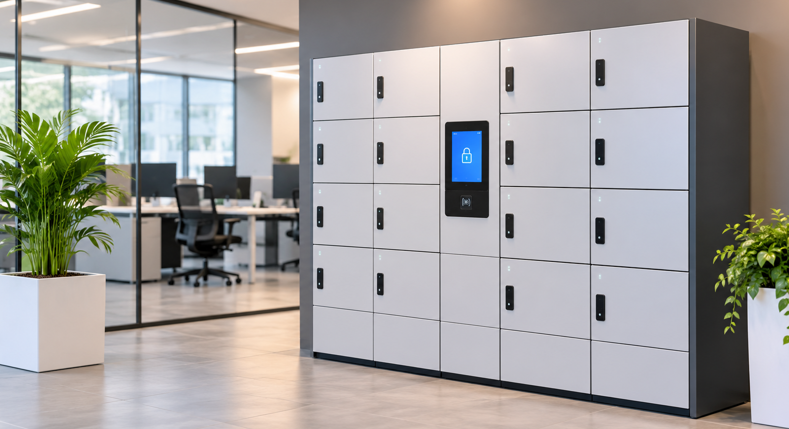

Smart lockers are changing how offices, educational institutions, residential buildings, warehouses and commercial facilities manage personal belongings, parcels and shared equipment. These systems provide controlled access, reduce the need for physical keys and help organisations manage storage more efficiently. However, their performance depends on proper planning, equipment selection and professional installation. Investing in smart locker installation services helps businesses establish a reliable storage system that suits their building layout, daily operations and security requirements.
Why Businesses Are Adopting Smart Locker Systems
Traditional lockers rely on mechanical locks, physical keys or combination codes. Although these options remain useful, they can create administrative difficulties in facilities with frequent users or shared storage requirements. Lost keys, forgotten combinations and manual access management can consume staff time.
Smart lockers use electronic locking mechanisms and digital access controls. Depending on the system, users can open compartments through PIN codes, access cards, mobile applications, QR codes or other authorised credentials.
Businesses can use these systems for several purposes:
- Parcel management: Employees and residents can collect deliveries without coordinating directly with couriers.
- Personal storage: Staff members can securely store bags, clothing and personal belongings.
- Equipment distribution: Organisations can control access to shared tools, devices and work equipment.
- Document handling: Offices can manage confidential paperwork and internal deliveries.
- Shared workspace management: Employees can access lockers according to their schedules and workplace requirements.
The ability to monitor access and manage permissions electronically makes smart lockers particularly useful in facilities with changing occupancy or high storage demand.
Planning the Right Locker Installation
A successful installation begins with understanding how the facility will use the lockers. Choosing equipment based solely on appearance or compartment capacity can create problems after deployment.
Businesses should assess several practical requirements before selecting a system.
1. Identify the intended users
The number of users and their storage habits determine the quantity, dimensions and arrangement of lockers. An office with rotating employees may need more shared compartments than a workplace where each person has an assigned locker.
2. Assess the installation location
Available floor space, wall conditions, accessibility, electrical connections and network coverage should be examined. Locker placement must also account for door movement, pedestrian traffic and emergency exit routes.
3. Select suitable compartment sizes
Different applications require different dimensions. Parcel lockers may need several compartment sizes to accommodate deliveries, while employee lockers may require space for bags, uniforms and personal items.
4. Evaluate access requirements
Some facilities benefit from card-based access, while others may prefer PIN authentication or mobile credentials. The selected system should be convenient for authorised users without weakening security.
5. Consider future expansion
A modular locker arrangement can make additional capacity easier to introduce as the organisation grows. Businesses should also check whether the management software supports additional units and users.
What Happens During Professional Installation?
A structured installation process helps prevent operational problems and unnecessary modifications. Experienced technicians generally begin with a site assessment, followed by equipment preparation, physical installation, system configuration and testing.
The process usually includes the following stages:
Site inspection and measurements
Technicians examine the proposed installation area, confirm dimensions and identify any building restrictions. They may also review power supply requirements, network access and mounting conditions.
Equipment positioning and assembly
Locker cabinets are assembled and positioned according to the approved layout. Depending on the model, units may require floor anchoring, wall mounting or connections between individual cabinets.
Electrical and network connections
Electronic lockers need an appropriate power source. Connected systems may also require wired or wireless network access to communicate with management software and access-control platforms.
Software configuration
The control system is configured to establish user permissions, access methods, administrative accounts and notification settings. Integration with existing workplace systems may also be completed where supported.
Testing and handover
Each compartment, locking mechanism and access method should be tested. Administrators should receive instructions on managing users, issuing credentials, handling access problems and maintaining the equipment.
How Smart Lockers Improve Daily Operations
Smart lockers can reduce several routine tasks that otherwise require manual attention. Their benefits depend on the quality of the equipment, software capabilities and suitability of the installation.
One major advantage is improved access management. Administrators can assign permissions, change access credentials and disable access when required. This reduces dependence on physical key distribution and collection.
Parcel management is another useful application. Delivery personnel can deposit packages in designated compartments, while recipients receive collection instructions. This arrangement reduces interruptions at reception desks and provides a more organised collection process.
Smart lockers can also improve accountability. Certain systems maintain access records showing when compartments were opened and which credentials were used. These records can help administrators investigate missing items or identify unusual access activity.
For facilities operating outside conventional office hours, electronic access can provide greater flexibility. Employees and authorised users may retrieve belongings or equipment without requiring a staff member to unlock individual compartments.
Outsourcing Installation for Better Project Coordination
Installing locker systems across multiple locations can require coordination between equipment suppliers, building managers, electricians, network technicians and other contractors. Managing these activities internally may place additional pressure on existing teams.
Organisations considering outsource installation services for products can assign specialist installation work to an external provider with the appropriate technical experience. This arrangement can help coordinate site visits, equipment handling, installation schedules and testing procedures.
Businesses planning larger projects may also consider outsourced installation services for businesses to manage deployments across offices, retail locations, educational facilities or distribution centres.
Before appointing an installation provider, organisations should review:
- Experience with electronic locking systems and similar equipment.
- Availability of trained technicians.
- Geographic coverage and capacity for multi-site projects.
- Electrical, networking and mounting capabilities.
- Installation documentation and quality-control procedures.
- Post-installation support and maintenance arrangements.
A clearly defined scope of work helps prevent confusion over responsibilities, project timelines and additional costs.
Security and Maintenance Considerations
Electronic access does not automatically guarantee complete security. The physical construction of the lockers, software configuration and management practices all influence how well the system protects stored items.
Businesses should use strong administrator credentials and restrict management access to authorised personnel. User permissions should be reviewed regularly, particularly when employees leave or change roles.
Software updates should be applied according to manufacturer recommendations. Updates can address security weaknesses, improve compatibility and maintain system reliability.
Physical maintenance also deserves attention. Hinges, electronic locks, door sensors and compartment mechanisms should be inspected periodically. Dust accumulation, loose fittings and damaged components can affect performance.
Facilities should establish a clear procedure for handling forgotten credentials, failed locks, power interruptions and network outages. Systems with manual override arrangements or backup power options may provide additional operational resilience.
Choosing an Installation Partner
The quality of installation influences how reliably a smart locker system operates over time. Businesses should look beyond the initial installation price and examine the provider’s technical capabilities.
A suitable contractor should understand the specific locker model, follow manufacturer instructions and recognise the building requirements associated with the project. Experience with electrical connections, network configuration and access-control software can be particularly valuable.
It is also useful to request a detailed installation proposal covering labour, equipment handling, site preparation, testing, documentation and any additional work. For multi-location deployments, businesses should confirm that the provider can maintain consistent installation standards across every site.
A professional smart locker installation project should finish with a documented handover, verified system operation and clear guidance for administrators.
Preparing for a Reliable Smart Locker Deployment
Smart lockers can support secure parcel collection, shared equipment management and personal storage across many types of facilities. Their success depends on matching the technology to actual user requirements and preparing the installation environment properly.
Businesses should establish clear objectives, assess available space, select appropriate access controls and appoint qualified installation specialists. A carefully managed smart locker install also requires testing, administrator training and a maintenance plan.
By treating installation as part of a wider operational project rather than simply placing cabinets inside a building, organisations can establish storage facilities that remain practical, accessible and dependable as their requirements change.