ByJohn A
Best Choker Necklaces: What to Know Before Buying
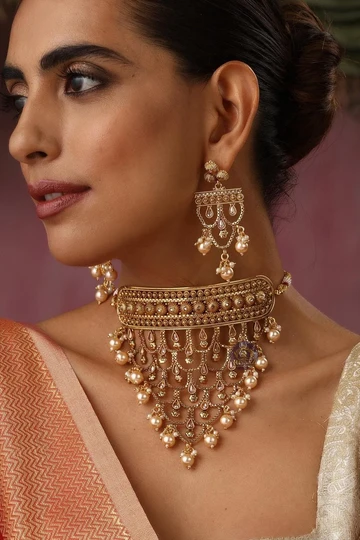
The best choker necklaces sit high on the neck, frame the face and hold more presence per centimeter than any other jewelry format. That closeness is the entire point. A long chain pulls the eye down the torso. A choker keeps attention where a portrait photographer would place it, right at the collarbone and jaw. Indian jewelry has understood this for centuries, which is why the guluband appears in Mughal miniature paintings and in modern bridal portfolios alike.
The best choker necklaces are separated from average ones by engineering rather than stone count. A good base plate curves with the neck instead of pressing against it. An adjustable dori or extension chain lets one piece fit different collar sizes. Weight sits evenly across the band, so the piece stays level through a six-hour reception. A choker that tilts or pinches gets left in the box no matter how well it photographs.
How a Choker Differs From Longer Necklaces
Placement changes the effect. A choker occupies the narrowest visible stretch of the body, so proportion matters more here than with a rani haar or an opera-length strand. Longer necklaces decorate an outfit. A choker frames a face, which means its scale has to answer to neck length and jawline before anything else. Shorter necks favor slimmer bands of two centimeters or less. Longer necks can carry wide statement collars without looking swallowed by them. Face shape plays a smaller part than most guides admit, though rounder faces do sit better above a band with a central drop that adds a little vertical line.
Choker Styles Worth Knowing
Roundups of the best choker necklaces keep circling back to the same short list of styles because each one comes out of a distinct workshop tradition and answers a different styling brief.
- Kundan chokers. Glass stones set against gold foil with a flat, mirror-like finish. The default choice for bridal reds and heavy silk because the surface catches candlelight beautifully.
- Polki chokers. Uncut diamond-style stones with a raw, smoky sparkle. Softer than CZ under harsh light, which suits daytime ceremonies and pastel lehengas.
- American diamond chokers. Cubic zirconia, usually shortened to CZ, cut to mimic faceted diamonds. The sharpest sparkle of the group and the natural pick for cocktail evenings.
- Pearl chokers. Rows of seed pearls or a single strand carrying a central pendant. The quietest of the styles and the easiest to wear with western clothing.
- Oxidized silver chokers. Darkened, tribal-inspired metalwork. Pairs with handloom cotton and linen better than any polished gold piece ever will.
Matching a Choker to the Neckline
The neckline decides first. Boat necks and strapless blouses leave the collarbone clear, and a choker fills that space without competing against fabric. High necks and closed collars change the assignment entirely. There the choker sits over the fabric as a collar in its own right, a trick lifted straight from runway styling. Deep V-necklines are the one shape that argues for a longer pendant instead, since a short band leaves too much empty skin between jewelry and fabric.
Fashion editors have folded the choker into power dressing, setting structured metal collars against blazers and crisp shirting. The pairing works because both signal control. A rigid gold band above a sharply tailored shoulder reads as deliberate in a way that a delicate chain never quite manages, and the look translates from wedding guest dressing to an evening work event without a single change.
Beyond the Wedding Calendar
The shift toward occasion wear that stretches across several events has moved chokers out of the bridal trunk and into regular rotation. A CZ choker bought for a sangeet works again at a formal dinner, then again over a plain black dress at a year-end party. Cost per wear drops with every outing, which remains the most honest measure of value in any jewelry purchase. Buyers who plan for repeat wear tend to reach for neutral stone colors and mixed metal tones, since those move between outfits with far less friction than a piece matched to one specific lehenga.
See also: Modern Outdoor Living Ideas With Stylish balcony railings with glass
Fit, Comfort and Care
A ranking of the best choker necklaces means nothing if the fit is wrong, so measure the mid-neck with a soft tape before buying. Add two centimeters to that number for a snug band and three for a relaxed drape. Anything tighter marks the skin within an hour. Adjustable dori closures forgive small measuring errors, though rigid hasli-style collars do not.
Storage does the quiet work. Gold-plated and stone-set pieces last longest when wrapped in soft cloth and kept away from moisture. Perfume and hairspray go on first, jewelry goes on last, every single time. A gentle pass with a dry microfiber cloth after each wear lifts away the sweat and product residue that dulls plating over months. Kundan and Polki settings dislike water, so cleaning stops at the dry wipe.
Choosing With Confidence
The best choker necklaces end up being the ones reached for without a second thought, and that comes down to fit and wardrobe honesty rather than price. A slim CZ band worn ten times beats a spectacular Kundan collar worn once. The smartest buyers start from the clothes already hanging in the cupboard and work backwards to the metal tone and stone style that suit most of them.
Measure the neck, match the neckline, and pick the piece that will actually leave the box.