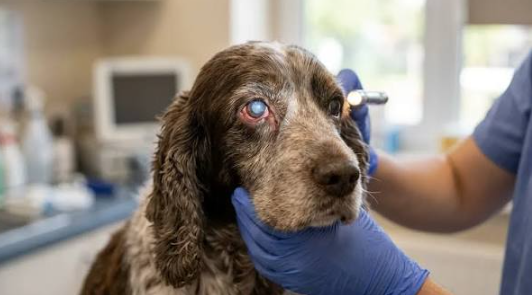

You may have heard your veterinarian in League City, TX mention gonioscopy and felt your stomach drop. That usually means glaucoma is on the table, or at least the risk of it, and that is hard to hear when your dog still seems mostly normal at home. Maybe one eye looked a little red, maybe your dog squinted once or twice, or maybe this came up because of breed risk and not because anything looks wrong yet. Either way, you are being asked to think about a sight threatening problem before you fully understand the test.
Gonioscopy is a screening exam that helps your veterinary team look at the drainage angle inside your dog’s eye. If that angle is abnormal, fluid may not drain the way it should, pressure can rise, and glaucoma can follow. The test does not treat glaucoma, but it can help catch risk early, guide monitoring, and shape decisions for the other eye if one eye has already been affected. If you are sorting through questions about gonioscopy for dogs, the short version is simple. The test is quick, usually well tolerated, and often gives useful information that can protect vision.
Gonioscopy shows whether your dog’s eye drainage angle is at risk
The main question most owners ask is what gonioscopy actually checks. Your dog’s eye makes fluid all the time. That fluid has to drain out through a structure called the iridocorneal angle. Gonioscopy lets a veterinarian examine that angle with a special lens. If the angle is narrow, malformed, or blocked by abnormal tissue, the eye may have a higher chance of developing glaucoma.
This matters most in dogs with primary glaucoma risk, especially breeds known to inherit angle problems. It also matters if one eye has already developed glaucoma, because the other eye may be at risk even if it looks comfortable today. Cornell’s overview of glaucoma in dogs explains how quickly pressure related damage can threaten vision, which is why screening has real value before a crisis starts.
The test is usually simple, but the timing matters
Another common concern is whether the test will be painful or stressful. Gonioscopy is typically done with numbing drops placed on the eye first. A special lens is then held gently against the cornea so the drainage angle can be seen. Many dogs tolerate it well with light restraint. Some need a calm setting and a little extra patience. A few may need sedation, especially if they are very anxious, painful, or resistant to handling around the face.
The harder part is not the test itself. It is knowing when to do it. If your dog belongs to a high risk breed, early screening can help establish a baseline before symptoms appear. If one eye has already had glaucoma, waiting too long to assess the other eye can close the window for prevention and close monitoring. Texas A&M’s piece on five things to know about canine glaucoma reflects what many owners learn the hard way, which is that this disease can move fast.
Six answers that clear up the most common worries about canine gonioscopy
1. Why was gonioscopy recommended if my dog seems fine? Because glaucoma risk can exist before obvious pain, redness, or vision loss. A normal looking eye can still have an abnormal drainage angle.
2. Does an abnormal result mean my dog already has glaucoma? No. It means the anatomy may increase the chance of glaucoma. Your veterinarian will combine gonioscopy results with eye pressure, exam findings, and your dog’s history.
3. Can gonioscopy prevent blindness? Not by itself. It is a diagnostic tool, not a treatment. What it can do is identify risk early enough for closer follow up, pressure checks, or preventive medication in some cases.
4. Should both eyes be tested? Often, yes. Glaucoma risk is frequently bilateral, even if only one eye has shown signs so far.
5. Is one normal gonioscopy enough for life? Not always. Your veterinarian may recommend repeat exams depending on breed, age, changes in pressure, or new symptoms.
6. Is this worth the cost? For many dogs, yes. Owners often struggle with the idea of paying for a test when there is no emergency yet. The cost of delaying can be much higher if glaucoma develops suddenly and vision is lost before treatment starts.
Comparing what gonioscopy can and cannot tell you
Confusion often comes from expecting one eye test to answer everything. Gonioscopy is one piece of the picture. It works best alongside pressure measurement and a full ophthalmic exam.
| Eye Evaluation | What It Checks | What It Helps With | Limits |
|---|---|---|---|
| Gonioscopy | Drainage angle structure | Identifying inherited or anatomic glaucoma risk | Does not measure pressure or confirm active glaucoma by itself |
| Tonometry | Intraocular pressure | Detecting pressure that is too high or too low | Pressure can fluctuate and may not explain why it changed |
| Full eye exam | Cornea, lens, retina, optic nerve, inflammation | Finding pain, vision loss, secondary causes, and overall eye health | May still need gonioscopy to assess angle anatomy |
This is why a veterinarian may recommend glaucoma screening for dogs even after a pressure check. A normal pressure reading today does not erase a risky drainage angle. The reverse is also true. A dog can have high pressure from other eye problems that are not primary angle disease.
Three steps you can take right now if glaucoma is a concern
Schedule the exam before symptoms become obvious. If gonioscopy has been recommended, ask how soon it should be done and whether both eyes need testing. Early information gives your veterinarian more room to act.
Track small changes at home. Watch for redness, squinting, cloudiness, rubbing at the eye, a larger looking eye, or bumping into things. These changes can seem minor at first, especially over a busy week, but they matter with glaucoma risk.
Ask for a clear follow up plan. You need to know the next step if the angle is normal, borderline, or abnormal. Ask how often pressure should be checked, whether a veterinary ophthalmologist is needed, and what signs mean same day care.
Early answers can protect your dog’s comfort and vision
If you are facing 6 questions about gonioscopy for a dog with glaucoma risk, you are already doing something helpful by slowing down and getting informed. Eye disease feels urgent because it is. It also feels unfair because many dogs hide pain until the problem is advanced. A prompt conversation with your animal hospital can give you a clearer picture of risk, timing, and what to watch for next.
Your dog does not need you to have all the answers today. Your dog needs you to take the concern seriously and move on the next step. Reach out to your animal hospital and ask whether gonioscopy, pressure testing, or a referral for a full ophthalmic exam is the right move now.