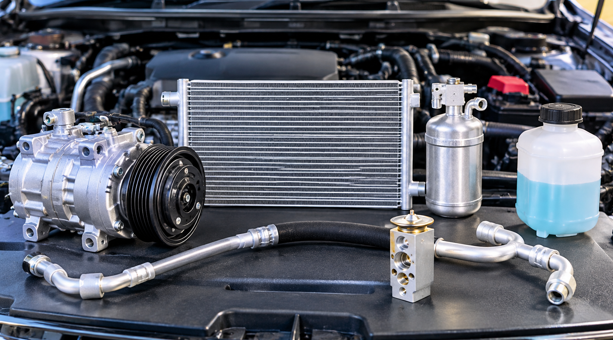

A properly functioning air conditioning system makes driving more comfortable, particularly during hot weather and long journeys. It also helps control humidity inside the cabin and keeps the windscreen clear by reducing condensation. Understanding the different car AC parts helps vehicle owners recognise early signs of trouble, understand repair requirements and make informed decisions when replacing worn components. Each part has a specific responsibility, from circulating refrigerant to removing heat from the passenger compartment. Knowing how these components work together can also help prevent minor faults from developing into expensive repairs.
How Does a Car Air Conditioning System Work?
A vehicle air conditioning system operates through a refrigeration cycle. It uses refrigerant to absorb heat from the cabin and release it outside the vehicle. Several mechanical and electrical components work together to maintain this process.
The cycle begins when the compressor pressurises refrigerant gas and sends it towards the condenser. The condenser releases heat into the outside air, allowing the refrigerant to change into a liquid. It then passes through an expansion device, which reduces its pressure and temperature.
The cold refrigerant enters the evaporator, where it absorbs heat from the air passing through it. A blower fan pushes the cooled air through the dashboard vents and into the cabin.
This process continues while the air conditioning system operates. Problems with any major component can affect cooling performance, airflow or overall system efficiency.
Essential Components Found in Vehicle AC Systems
Modern air conditioning systems contain several components that must operate correctly to provide consistent cooling. Some manage refrigerant circulation, while others regulate temperature, airflow and system pressure.
1. AC Compressor
The compressor is responsible for circulating refrigerant throughout the air conditioning system. It receives low-pressure refrigerant gas from the evaporator, compresses it and sends high-pressure gas towards the condenser.
Compressors are generally driven by the engine through a belt and clutch arrangement, although some vehicles use electronically controlled or electric compressors.
Common compressor problems include:
- Unusual noises when the AC is switched on.
- Reduced cooling performance.
- Refrigerant circulation problems.
- Compressor clutch failure.
- Oil leakage around compressor seals.
A failing compressor may affect the entire cooling cycle. Proper diagnosis is necessary before replacing it because refrigerant contamination or other system faults can damage a replacement unit.
2. Condenser
The condenser is usually positioned near the front of the vehicle, close to the radiator. Its job is to release heat from the high-pressure refrigerant into the surrounding air.
Air passes across the condenser fins as the vehicle moves. Cooling fans also help maintain airflow when the vehicle is stationary or travelling slowly.
Dirt, insects, damaged fins and road debris can restrict heat transfer. A blocked or damaged condenser may cause higher operating pressures and reduced cooling.
Regular inspection and careful cleaning can help maintain its performance.
3. Evaporator
The evaporator is generally located inside the dashboard, within the vehicle’s heating and ventilation assembly.
Cold refrigerant flows through its internal passages, absorbing heat from cabin air. Moisture in the air also condenses on the evaporator surface and drains outside the vehicle.
Signs of evaporator-related problems include:
- Weak cooling despite adequate refrigerant levels.
- Unpleasant smells from the air vents.
- Water leakage inside the cabin.
- Refrigerant leaks within the dashboard assembly.
Since accessing the evaporator often requires dashboard disassembly, repairs can involve considerable labour.
4. Expansion Valve
The expansion valve controls how much refrigerant enters the evaporator. It reduces refrigerant pressure and regulates its flow according to cooling demand.
A malfunctioning valve can restrict refrigerant circulation or allow excessive refrigerant into the evaporator. Both situations can affect cooling performance.
Some vehicles use an orifice tube instead of a traditional expansion valve. The correct component depends on the vehicle’s AC system design.
5. AC Receiver-Drier and Accumulator
These components help protect the air conditioning system from moisture and contaminants.
A receiver-drier is generally used in systems with an expansion valve and stores liquid refrigerant before it reaches the valve. An accumulator is commonly found in systems using an orifice tube and separates liquid refrigerant from gas before it enters the compressor.
Both components help prevent moisture-related corrosion and compressor damage.
Understanding Auto AC Components and Their Supporting Functions
Apart from the major refrigeration components, several supporting parts influence the system’s operation.
Auto AC components include electrical switches, pressure sensors, temperature sensors, relays, control modules, blower motors and cabin air filters.
Each contributes to a different aspect of air conditioning performance.
- Blower motor: Pushes cooled air through the dashboard vents.
- Cabin air filter: Traps dust, pollen and other airborne particles.
- Pressure switch: Monitors refrigerant pressure and helps protect the system.
- AC relay: Controls electrical power supplied to certain components.
- Temperature sensor: Helps regulate cabin temperature.
- Cooling fan: Supports heat removal from the condenser.
Electrical faults can sometimes produce symptoms similar to mechanical failures. For example, a defective relay may prevent the compressor clutch from engaging even when the compressor itself is in good condition.
Checking electrical connections and sensor readings should therefore form part of a proper AC inspection.
How to Identify Problems With Car Air Conditioning
Several warning signs indicate that an air conditioning system may need professional attention.
Warm Air From the Vents
Warm air can result from low refrigerant levels, compressor problems, condenser faults or electrical issues. A refrigerant leak should be investigated rather than repeatedly topping up the system.
Weak Airflow
Reduced airflow may indicate a blocked cabin filter, faulty blower motor or restricted evaporator airflow. Replacing a dirty filter can sometimes resolve the issue.
Unusual Sounds
Grinding, rattling or squealing noises may point to compressor bearing wear, loose mounting hardware or belt problems. Ignoring these sounds can result in further damage.
Unpleasant Odours
Musty smells often develop because of moisture, dirt or microbial growth around the evaporator and ventilation system. Cleaning the affected area and checking the condensate drain can help address the cause.
Water Inside the Vehicle
A blocked evaporator drain can cause condensation to collect inside the cabin. This should be checked promptly to prevent damage to carpets, insulation and electrical connections.
Choosing the Correct Aircon Parts for a Car
Selecting replacement components requires more than matching the vehicle’s make and model. Different production years, engine configurations and trim levels may use different air conditioning systems.
Before purchasing replacement aircon parts car owners should check the following details:
- Vehicle identification number: The VIN can help identify the correct vehicle specification.
- Part number: Compare the original component number with the replacement.
- Refrigerant compatibility: Confirm that the component supports the refrigerant specified by the manufacturer.
- Physical dimensions: Check mounting points, pipe connections and electrical connectors.
- Manufacturer specifications: Follow the vehicle manufacturer’s recommendations for compatibility and installation.
Using incorrect components can result in refrigerant leaks, poor cooling or installation difficulties. Reliable suppliers should provide clear product specifications and compatibility information.
Maintenance Practices That Help Extend AC Component Life
Regular maintenance can reduce unnecessary wear and help identify faults before they become expensive repairs.
A practical maintenance routine should include:
- Inspecting the condenser for dirt, debris and damaged fins.
- Replacing the cabin air filter according to the recommended service interval.
- Checking compressor belts and electrical connections where applicable.
- Inspecting refrigerant lines and connections for leakage.
- Keeping the evaporator drain clear.
- Monitoring cooling performance throughout the year.
- Arranging professional inspections if unusual noises or cooling problems develop.
The air conditioning system should also be serviced using the correct refrigerant recovery, evacuation and charging equipment. Refrigerants should never be released deliberately into the atmosphere.
Why Correct Vehicle Air Conditioning Parts Matter
Using compatible vehicle air conditioning parts supports efficient refrigerant circulation, reliable temperature control and consistent cabin airflow. Incorrect or poorly manufactured replacements can create pressure imbalances, leakage and premature component failure.
Quality matters particularly for compressors, condensers, expansion valves and refrigerant hoses because these components operate under specific pressure and temperature conditions.
Vehicle owners should consider component specifications, manufacturer compatibility, warranty coverage and supplier reliability before making a purchase. Professional installation is also advisable for refrigerant-related repairs because specialised equipment and technical knowledge are required.
Final Thoughts
A vehicle’s air conditioning system depends on several interconnected components, each performing a specific function. Understanding their responsibilities makes it easier to recognise performance problems, discuss repairs with technicians and select suitable replacements. Regular inspections, correct refrigerant handling and compatible components can help maintain dependable cooling while reducing the risk of avoidable system damage.