ByJohn A
Large Pond Fountains for Golf Course and Irrigation Ponds
A golf course pond usually has to do two jobs. It frames the view from the tee, and on many courses it also holds the water that keeps the fairways green. Course managers quickly learn that those two jobs can pull against each other. Water that sits still through a hot July may look fine from the clubhouse and still clog irrigation filters by August.
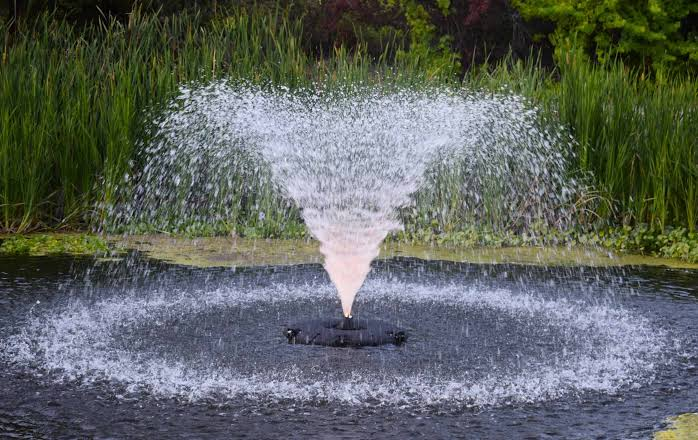
Equipment like large pond fountains keep stored water circulating and add oxygen across a wide surface, which helps golf ponds stay clearer and easier on the irrigation system. A single display in the right spot also gives golfers a clear visual marker on the hole. For course owners, one purchase serves both the turf crew and the players.
How Large Pond Fountains Help Irrigation Ponds
Irrigation ponds on golf courses draw water through an intake line near the pond’s bottom or side. When algae mats form, pieces break off and drift toward that intake. Crews then spend early mornings cleaning screens and filters instead of mowing or setting pins. A fountain that keeps the surface moving makes it harder for floating mats to collect in one corner.
Many courses irrigate with reclaimed water, which is treated wastewater supplied by a local utility. It is a sensible source in dry regions, although it often carries more nitrogen and phosphorus than well or city water. Those nutrients feed algae once they settle into a warm, shallow pond. Moving water and added oxygen help the pond cope with that extra nutrient load through the season.
Some summer blooms come from cyanobacteria, often called blue-green algae. These organisms grow best in warm, still water with plenty of nutrients, and some types can produce toxins. A fountain cannot remove nutrients, and it will not stop every bloom. It does keep the surface layer mixing, and that makes the pond a little less suited to the calm conditions cyanobacteria prefer.
See also: How Can Cerebral Palsy Affect Everyday Life and Independence?
Sizing and Power for Large Pond Fountains
On a pond covering two or three acres, the figure that matters most is net flow rate. It shows how many gallons per minute the fountain lifts into the air. Horsepower appears on every label, but a unit sold as 1 HP can deliver closer to 1/3 HP of output. Two fountains with the same horsepower claim may move very different volumes of water.
Course ponds often sit far from the nearest maintenance building. Longer cable runs lose voltage along the way, so the wire gauge must match the distance and the fountain’s power draw. A licensed electrician can size the cable and install ground-fault protection at the shore. It helps to settle this before choosing a model, since a long run can change the budget.
Fountain Placement Around Greens and Cart Paths
A tall spray looks impressive from the tee box, and perhaps that is the whole point on a signature hole. On windy afternoons, though, the spray can travel well past the pond’s edge. Mist blown across a green or a cart path leaves wet spots, and golfers notice it. A wind-sensing controller or a lower spray pattern handles most of this.
Lighting makes sense near the clubhouse or along an entrance road, where people see the pond after dark. Out on the back nine, it may add very little, and some courses skip lights on distant ponds entirely. LED fixtures mounted on the float use less power than older halogen lights, and a timer can switch them off once the evening crowd has gone home.
Large Pond Fountain Buying Notes for Course Managers
- Net flow rate for each nozzle option, listed by the seller in gallons per minute.
- Distance from the power source to the planned fountain spot, measured before ordering.
- Water depth at the anchor points, since each unit needs a minimum depth to run.
- Wind direction during afternoon play, checked over several days.
- Nozzle choices that allow a lower pattern on exposed holes.
- A spring and fall check of the intake screen and anchor lines, set on the maintenance calendar.
Cleaner Irrigation Water and a Better View From the Tee
A well-sized fountain gives a course cleaner water to irrigate with and a better view for players on the tee. The results build over a full season, not in a single week. Share your pond size, depth, and distance to power with a fountain specialist, and ask for net flow figures on every model you consider before choosing.