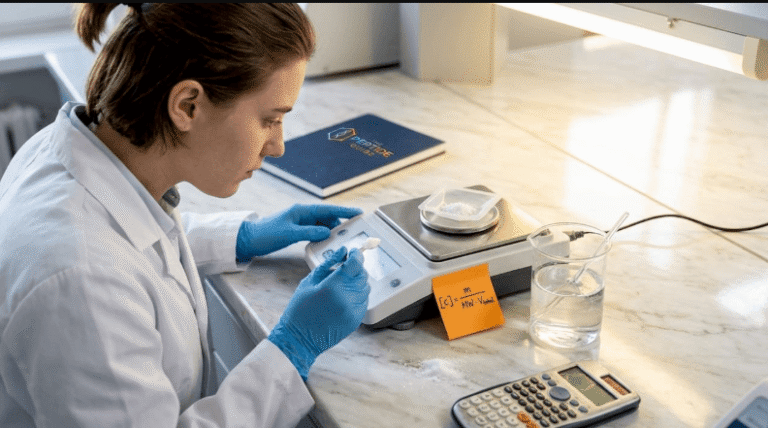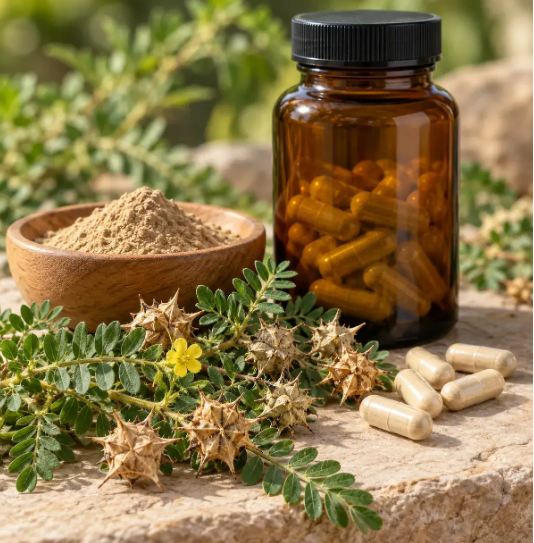

A specification sheet looks harmless. It is one page, maybe two, filled with numbers and test names that most buyers skim before signing off on a purchase order. With Tribulus terrestris extract, that quick skim can cost you a full production batch. Two suppliers can both promise “40% saponins” and still send you very different materials, because the number on the page depends on how it was measured. So before you compare prices, it pays to know what each line on the sheet is telling you and what it leaves out.
Most buyers check the headline figure on a Tribulus terrestris extract sheet and move on. That habit is risky. The headline figure is only one part of the story, and sometimes it is the least useful part.
Start With Botanical Identity and Plant Part
The first lines should name the plant in full: Tribulus terrestris L., from the family Zygophyllaceae. Look for the plant part next. Fruit is the most common source, though some materials come from roots or aerial parts.
Why should you care which part was used? Because the chemistry changes from one plant part to another. If the sheet says “Tribulus” with no plant part, ask for it in writing.
Next, check how identity was confirmed. A line reading “Conforms” means little unless a method sits beside it. HPTLC fingerprinting against a reference material is a common approach, and it gives you something you can verify later.
The Saponin Figure on a Tribulus Terrestris Extract Spec Sheet
Here is where many buyers get caught out.
Saponin content can be reported in two broad ways:
- Gravimetric method: weighs a total saponin fraction. It tends to produce higher numbers, but it can count other compounds that came along for the ride.
- Chromatographic method (HPLC or UPLC): measures specific compounds, often protodioscin. The numbers look smaller, yet they tell you far more.
A sheet showing 40% saponins by gravimetry and another showing 20% protodioscin by HPLC are not comparing the same thing. The second may actually be the more concentrated material.
Researchers describe protodioscin as a quality marker in the plant, which explains why serious buyers ask for it by name. There is a catch, though. Saponins absorb very weakly under the UV detectors used in HPLC, so method details matter. A good sheet names the method, the detector and the reference standard used.
If any of those three are missing, ask. A supplier who can answer quickly is usually one worth talking to further.
Why Origin Changes the Numbers
This part surprises people. Raw Tribulus terrestris material from different regions can carry quite different protodioscin levels.
One study found about 0.55% protodioscin in Crimean raw material against roughly 0.34% in material from Western Siberia. Another study measured 0.65 to 0.73% in a raw plant sample.
What does that mean for you? Two batches from the same supplier can drift if the sourcing region changes. Ask whether the plant origin stays fixed from batch to batch, and whether you will be told when it changes.
See Also: 5 Factors Holistic Dentists Consider Before Recommending Treatment
Extract Ratio and Carrier Content
Some sheets list a ratio like 10:1 or 20:1. That tells you how much dried plant went into each unit of extract. It does not tell you strength on its own.
Two things are worth checking alongside the ratio:
- Whether a carrier such as maltodextrin was added, and how much
- Whether the marker compound figure was measured before or after the carrier went in
A high ratio with a lot of carriers can end up weaker than you expected. That is not always a problem, but you should know it before formulation starts.
Contaminant Testing Lines You Should Never Skip
Here is why this section deserves real attention. A failed contaminant result can mean a recall, and recalls are far more costly than any price gap between suppliers.
Look for clear limits and actual results for:
- Heavy metals: lead, arsenic, cadmium and mercury, ideally tested by ICP-MS
- Microbial counts: total plate count, yeast and mould, plus absence of E. coli and Salmonella
- Pesticide residues: with the reference standard named
- Residual solvents: since many extracts use methanol, ethanol or water during processing
A sheet that shows only “Complies” with no figures leaves you guessing. Real results, even when they sit well under the limit, show that someone actually ran the test.
Questions Worth Asking Before You Approve a Supplier
Do you know what would happen if your next batch tested 15% lower than the last one? Many buyers only find out when a finished product fails its own label claim.
A few short questions can save that headache:
- Which marker compound do you test, and how?
- Is the plant origin fixed across batches?
- Can you share CoAs from three recent batches?
- Which certifications cover the facility, and what is their scope?
Clear answers point to a supplier that keeps proper records. Vague ones tell you something too.
A spec sheet is only as useful as your ability to question it. If you are sourcing botanical extracts and want to talk through specifications, documentation or certification scope, reach out to the ShriNanda Herbs team to discuss your requirements.