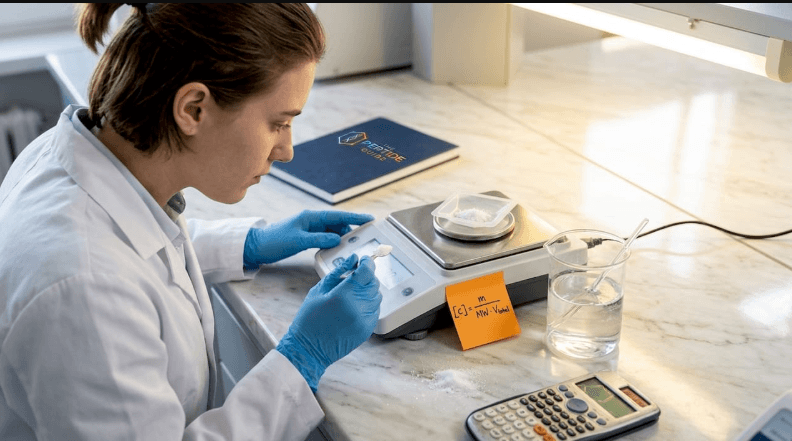

You need to handle high-purity research items with care. Use the right steps and store them in a safe way. This keeps their quality good. If you are new to this, it is important to know the rules of mixing and storing before you use anything in the laboratory. Bad handling, wrong settings, or missing papers can make these items less stable. This can also lead to bad results for your work. Always read what the company tells you. Follow lab safety rules and use any helpful papers about how to handle things. This helps keep your research run in the same way every time. No matter if you do your work in a big lab or are just learning, knowing these simple steps will help you manage these items in the right way.
If you want to find out more about research materials and product papers, you can go to astralpeptide.com. It is a good place to look for this info.
1. Understanding High-Purity Research Compounds
High-purity research compounds are materials made or handled to meet strict purity rules for science experiments. These materials have things like their chemical makeup, how pure they are, what kind of molecules they have, and details about each batch.
Before you work with any kind of chemical, read the product paperwork first. A certificate of analysis (COA) gives key facts about what it is, how pure it is, how tests are done, and batch details, especially when sourcing compounds like astral peptides. Safety data sheets (SDS) also tell you what could be dangerous, what safety gear to use, and how you should handle it safely.
Knowing these details helps people find out what they are working with. It also helps them see if there is anything special they need to do before they start work in the lab.
2. What Reconstitution Means and Why It Matters
Reconstitution is making something ready for use. This is done in the way that you know is correct and has been proven. What you need to do will depend on what you have. It may be that what you have is a powder or a granule that needs reconstituting by mixing with an appropriate fluid or other suitable medium.
However, you cannot scale up every research chemical in the same manner. It depends on factors such as how it dissolves in a liquid, its shelf life, interaction with other substances, and how you intend to use it.
If you are new to “this” – don’t imagine that one method to prepare work applies to all. Be sure to read your maker instructions, pick the correct safety document and always set safety as well as industry established rules. Using the incorrect thing to blend, or trying a DIY way which has not been proven, can alter what you have as well as what you determine.
3. Selecting Appropriate Handling Equipment and Laboratory Conditions
Good lab equipment allows you to work safely. It also reduces the likelihood of contamination or mixing in of other substances by accident. The supplies you require will vary depending on your materials and process. You will require some measuring equipment that is calibrated, as well as appropriate vessels, gloves, and other equipment you require for the lab.
Your work environment needs attention. You need a clean work place to prevent mistakes, along with a place that’s safe. Scientists are required to adhere to lab cleaning regulations and use safety equipment such as gloves, aprons, and eye protection to protect themselves from the properties of any chemical compound.
You should be able to use your equipment easily with the material you are working with. The containers, covers and tools should be safe with the chemicals you are working with. Make sure your equipment is clean, regularly checked and used properly in line with lab rules.
4. Best Practices for Storing Research Compounds
How you store high-purity research materials is key for keeping them in good shape. Things like temperature, humidity, light, and even dirt in the air can change how stable a material is.
There is no single way to store every research item. Some of these need to be kept cold in a fridge. Others may have rules set by the company that makes them.
Researchers need to keep these storage tips in mind:
Adhere maker instructions: Use the storage conditions outlined in the product papers.
Protect from light: Store in packaging that protects against light where necessary.
Not in it: Try not to let moisture, warmth, and air access it unless it has to.
Provide accurate tags: Note the item name, batch number and handling instructions you will need.
Utilize right bins: Decide on bins which help it and maintain your storage organized.
Good storage management helps cut down on handling mistakes. It also helps keep lab records safe and easy to find.
5. Common Mistakes Beginners Should Avoid
People who are new to research can make mistakes when they handle or store high-purity compounds. Even a small mistake can make their work in the laboratory not match every time.
Common mistakes include:
Lack of adherence to storage regulations established for the product.
Using a solvent or mixture that is incompatible with the material.
Handling work materials before having read the safety papers for them.
Employing equipment that is dirty or inadequate for the task.
Forgetting compounds are in the open like with air, water, light, etc.
Didn’t record the specifics of each batch and processing.
The idea that every compound can be made and stored in the same way.
You can avoid these mistakes by taking time to read all documents closely. You should also get the right training and follow the lab procedures that are already in place. If something is not clear, talk to trained lab staff instead of just guessing.
6. Conclusion: Building Responsible Research and Storage Practices
If you’re going to work with research chemicals, keep in mind the aspects of mixing and storing the reagents. It is important that you know the basic properties of each research chemical, understand the safety information, choose the right equipment and follow established laboratory procedures so that you work under good conditions.
If you are a newbie then its very essential that you keep in mind that not all the substances are the same. Do not treat all of them the same. All of them have different behaviour of storage, selling or handling. There are different ways of handling all of them, not the same.
Maintain good documentation. Accurate storage is needed for good research supplies and lab papers. Take a look at astralpeptide.com to understand more about research supplies and lab papers. Always read the labels and safety descriptions of any supplies you use in the lab.